
Arrest History in Tennessee
A Tennessee arrest creates several records, not one master file. The arresting sheriff, city or metro police department, Tennessee Highway Patrol district, campus police department, TBI unit, or federal agency creates the incident report and arrest paperwork. The county jail creates the booking number, intake and release times, photograph, fingerprints, charge and bond entries, and custody status. General Sessions commonly holds the first court events. A felony judgment later sits in Circuit Court or a separately established Criminal Court.
TBI receives qualifying misdemeanor and felony arrest fingerprints. TORIS is its statewide name-based release. The result is based on fingerprint submissions, but the public search itself is not a fingerprint identity check and does not search aliases in the online result. A recent unsubmitted event may be absent. A county roster can show custody before the court files a case. Those timing gaps explain why Tennessee arrest records can disagree without any source being wholly false.
Tennessee Arrests by the Numbers
TBI’s official Crime in Tennessee publication counted 250,922 arrests in 2023. It separated 235,632 adult arrests, 15,204 juvenile arrests, and 86 arrests with unknown age. The rate was 3,509.9 per 100,000 residents. These are arrest events reported through the state program, not a count of unique people. One person can have more than one arrest. Published incident totals also should not be relabeled as arrest totals.
The TBI CrimeInsight dashboard provides statewide and agency-level crime reports.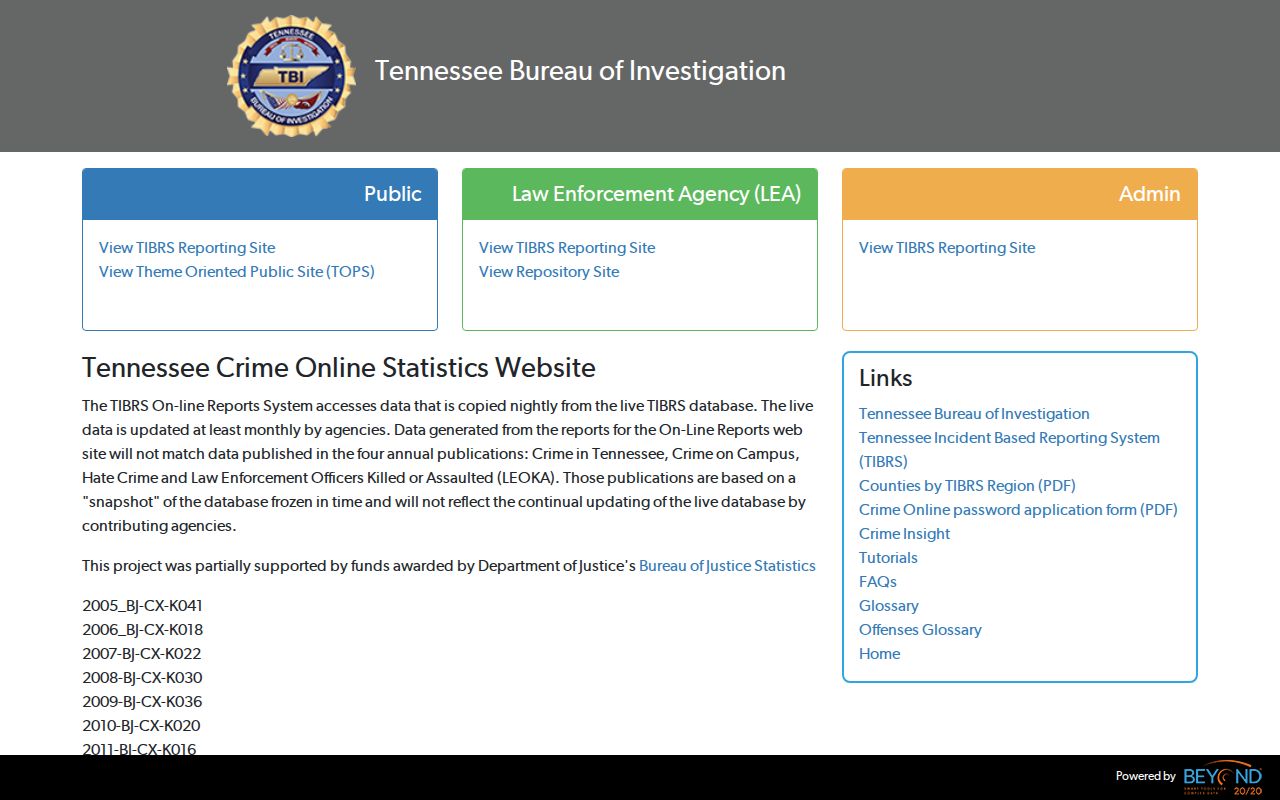
The interface lets a reader select a topic, jurisdiction, year, dimensions, and report members, then show, rank, drill into, or export aggregate results. Tennessee agencies can update reports, so a later export may differ. TBI also identifies data-quality problems for specific jurisdiction-years and points users to official PDF reports for affected arrest counts.
Note: Tennessee crime cases, arrests, and unique people are different measures and should never be merged into one total.
How Arrests Become Part of a Tennessee Record
At booking, Tennessee jail staff take fingerprints and create a local intake entry. Qualifying prints go to TBI’s Criminal Justice Information Services Division. The state event receives identity and transaction controls, including the State Control Number used in Tennessee reporting. Later, a clerk or other authorized user can send the disposition, diversion, or expungement through FlexCheck. TBI can then link the court result to the fingerprint-founded arrest cycle.
Data flow: Arrest › Booking › Fingerprint Submission › TBI Repository Entry › Court Disposition
Not every Tennessee arrest reaches that statewide path. A citation or event without submitted prints may not appear. A disposition can be missing or linked late. TORIS also depends on the name, date of birth, race, and sex entered by the requester. TBI reported 585,742 fingerprint submissions in fiscal year 2023-24, of which 309,969, or 53 percent, were criminal-arrest fingerprints. The rest included fee and law-enforcement applicant submissions. The count shows why a fingerprint submission total is not an arrest total.
Who Holds Tennessee Arrest Reports
The correct office depends on who acted. A county sheriff keeps its law-enforcement reports, warrant records, and jail bookings. A city or metro police records unit keeps municipal incident and arrest reports, while the county jail may hold the booking. Tennessee Highway Patrol keeps highway and traffic investigation records through its district or Department of Safety public-records channel. TBI holds files for investigations assigned to it, but TORIS is a criminal-history product rather than a copy of a TBI investigative narrative.
| Record | First Tennessee Source | What It Answers |
|---|---|---|
| Incident or arrest report | Arresting agency | Alleged conduct, officers, property, and narrative |
| Booking record | County jail | Intake, charges, bond, release, and current custody |
| Case outcome | County court clerk | Filed counts, plea or verdict, judgment, and sentence |
| State history | TBI TORIS | Submitted fingerprint-founded Tennessee events and reported outcomes |
A request under the Tennessee Public Records Act goes to the office that made or keeps the record. Ask for an existing item and give the incident number, date, location, and record type. Active investigations, juvenile data, victim details, medical facts, and protected identifiers may be withheld or redacted.
How to Look Up Tennessee Arrests
Use a source sequence. It preserves the difference between a live booking, a criminal charge, and a statewide history. No official statewide public booking-photo search was found. Current jail rosters remain county by county, and a removed roster entry does not mean that the agency, court, and TBI records were erased.
TBI’s official TORIS portal accepts a statewide name check for $29. The fee is nonrefundable. Online results omit alias searching, so accurate name, birth date, sex, and race details help narrow possible matches but do not prove fingerprint identity. Credit-card users can pay with Visa, MasterCard, or Discover. Billable-account users sign in through a separate route. The BI-0238 form adds alias lines and mail, fax, email, or in-person delivery choices; its stated processing window is three to five business days. A TORIS result should still be matched to the county court outcome.
- Identify the likely county and arresting agency. Search the sheriff’s official current-inmate or booking page, or contact the jail booking desk when no public roster exists.
- Check the General Sessions docket for the warrant, initial appearance, and next setting. Use Circuit or Criminal Court for a later indictment or felony judgment.
- Request the report from the arresting agency’s records coordinator. Give the incident number, date, place, and precise document sought.
- Order TORIS for older fingerprint-founded Tennessee events across counties, then verify each event with the originating court.
- If custody moved, use TDOC FOIL for state felony custody or supervision and the federal channels for federal custody.
Open the directory of all 95 Tennessee counties to reach the sheriff, jail, and court route for the county where the arrest occurred.
Tennessee Jail Rosters and FOIL
County jails and TDOC prisons are separate Tennessee custody systems. County jails hold people before trial, people serving locally retained terms, and some people awaiting transfer or held under agreements. Sheriffs and jail administrators submit monthly population data to TDOC, but that reporting does not turn FOIL into a county-jail locator.
The TDOC Jail Summary Reports publish county-reported monthly snapshots.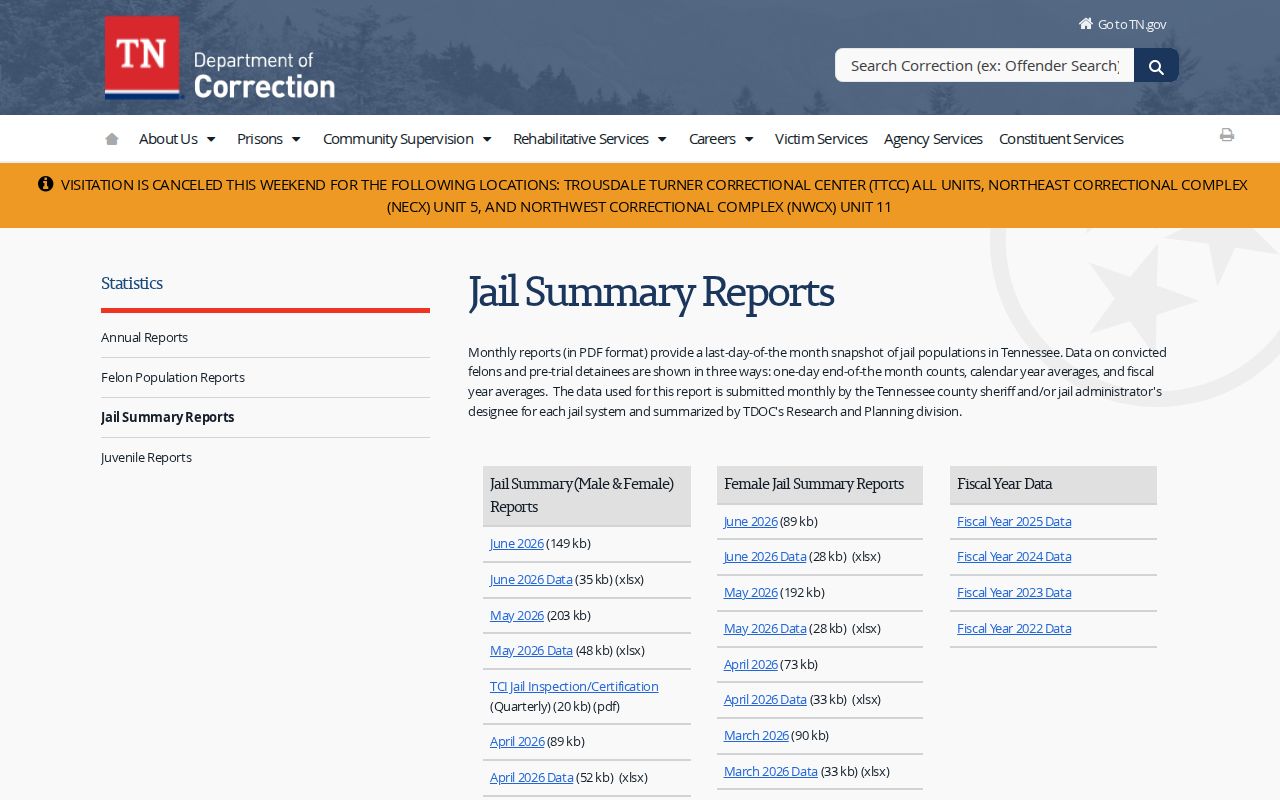
The statewide series helps show jail scale and change, but it does not return a person’s Tennessee booking record.
TDOC Felony Offender Information Lookup covers felony offenders who are or have been in Tennessee state custody or supervision.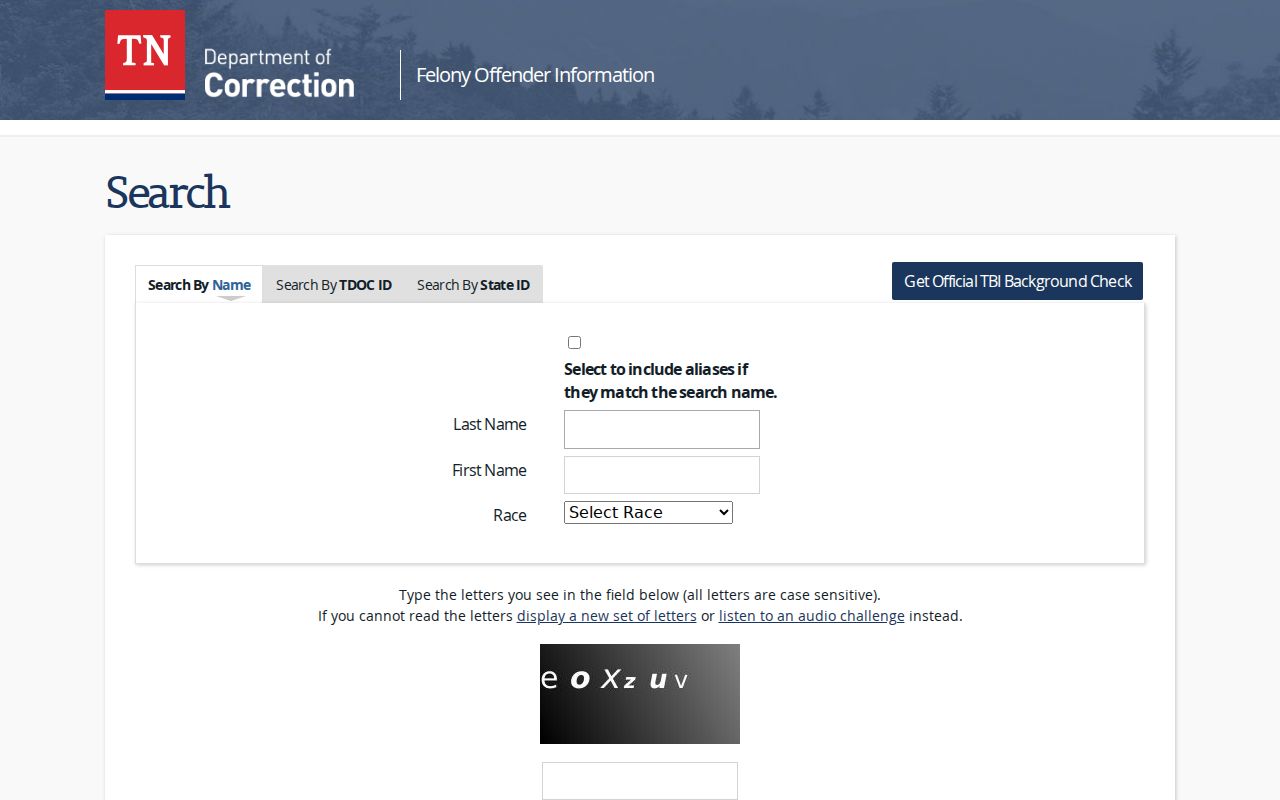
FOIL searches by name with optional aliases and race, or by TDOC/TOMIS ID or state ID. A CAPTCHA is required. A profile can show identity descriptors, aliases, supervision status, assigned location, sentence dates, release eligibility, parole information, and active Tennessee sentences. TDOC warns that source jurisdictions should confirm the data. On June 30, 2025, Tennessee also reported 9,049 state felons in local jails, so a sentenced person may still be physically held in county custody.
What an Arrest Record Shows
A Tennessee agency report and a Tennessee jail booking answer different questions. The report may identify the call, alleged offense, location, officers, probable-cause narrative, witnesses, property, evidence, vehicle, and supplements. The booking focuses on intake and custody. TBI’s arrest cycle is narrower still: fingerprint identity, arrest date and agency, charges, tracking controls, and any linked court outcome. None of these sources alone guarantees a complete case history.
| Name & Identifiers | Name, aliases, age or birth date, sex, race, physical descriptors, fingerprints, and state identity controls where maintained. |
|---|---|
| Arrest Date & Place | When and where the Tennessee arrest or jail intake occurred. |
| Arresting Agency | The sheriff, police department, THP, TBI, campus department, or other body responsible for the event. |
| Booking Charges | Each alleged offense recorded at intake; a prosecutor or court may later amend, reject, or dismiss it. |
| Booking Number & Photo | The jail’s intake key and photograph, subject to county access rules and lawful redactions. |
| Bond & Release | Bond amount and type, court date, custody status, release reason, transfer, or assigned-unit data where public. |
Protected fields should not be republished. A booking photograph is an intake artifact. It is not proof of guilt and does not give permission to shame, harass, or misidentify a person.
Note: Tennessee booking fields vary by county, so confirm unfamiliar labels with the jail that created the record.
Reading Tennessee CrimeInsight Data
CrimeInsight reports aggregate Tennessee activity, not personal arrest histories. Its 2024 reports listed 17,965 burglary cases, 25,087 motor-vehicle-theft cases, 28,890 fraud cases, and 4,329 robbery cases. Separate Drugs and DUI reporting listed 20,939 DUI cases and 46,916 drug or narcotic violation cases. These are incident or case measures. They should not be described as numbers of arrests, defendants, or convicted people.
The official 2024 Tennessee property-crime report shows statewide counts and comparison controls.
The report can add public context to Tennessee arrest trends, but it cannot verify whether one named person was arrested. TIBRS arrestee data use fields such as State Control Number, arrest date and type, offense code, age, sex, race, ethnicity, resident status, and transaction identifiers. Published aggregates strip away the role of a personal dossier.
Arrests vs Convictions
An arrest records custody based on alleged probable cause. A conviction is a Tennessee court judgment of guilt after a plea or trial. Booking charges may be rejected, dismissed, nollied, no-billed, amended, or followed by acquittal. Read the county docket and judgment before assigning an outcome to an arrest entry.
| Arrest Record | Conviction Record | |
|---|---|---|
| Created by | Arresting agency and county jail | Tennessee court, then reported to state systems |
| What it proves | A custody or arrest event was recorded | Guilt was established by plea or verdict |
| Public access | Agency and county rules, TPRA limits, and active-case protections apply | Clerk access and Rule 34 limits apply |
| Can it clear | Qualifying non-conviction outcomes may be expunged through the originating court | Relief is narrower and depends on current statutory eligibility |
Note: A Tennessee arrest without a reported disposition is not proof of guilt; verify the final count-level judgment with the court clerk.
Tennessee Custody Change Alerts
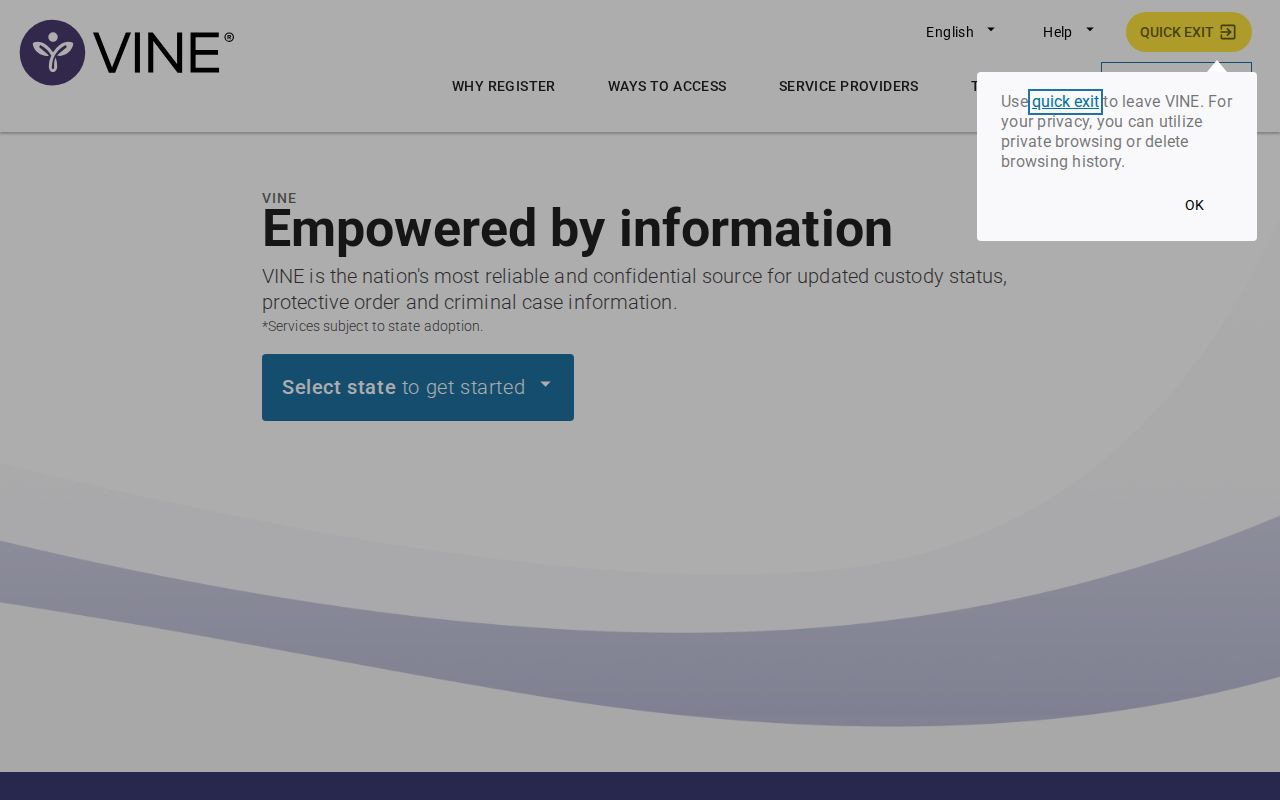
Tennessee VINE adds notice after a custody search. Select Tennessee, search by name or TOMIS number, and register for phone, email, TTY, or text alerts. Notifications may cover TDOC location, transfer, custody changes, sentence expiration, release, and parole eligibility. It is a notification service, not the original arrest report, court judgment, or full Tennessee criminal history.
The official VINELink entry point routes users to Tennessee custody lookup and notification options.
Alerts help track a change after registration, but source records still control. Confirm a jail release with the county custodian, a TDOC status with FOIL or TDOC, and a parole action with the Tennessee Board of Parole. If a dismissed Tennessee arrest remains visible, start at the originating court. Eligible expungement under T.C.A. §40-32-101 begins there. Keep a certified order, then check the county record, one’s own TORIS result, and FOIL if the event reached corrections. Provide that order to a custodian when a qualifying entry persists after processing.